
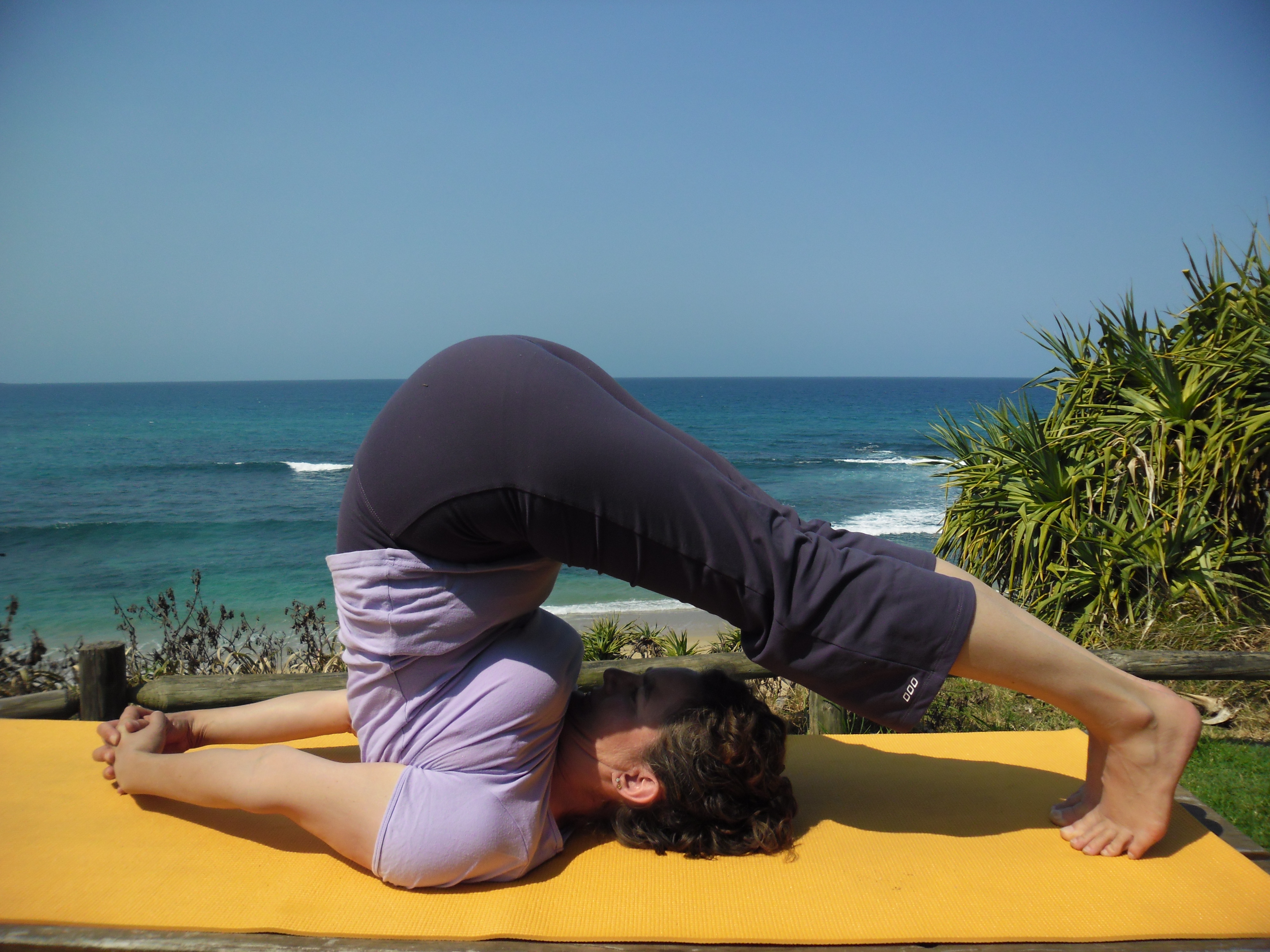
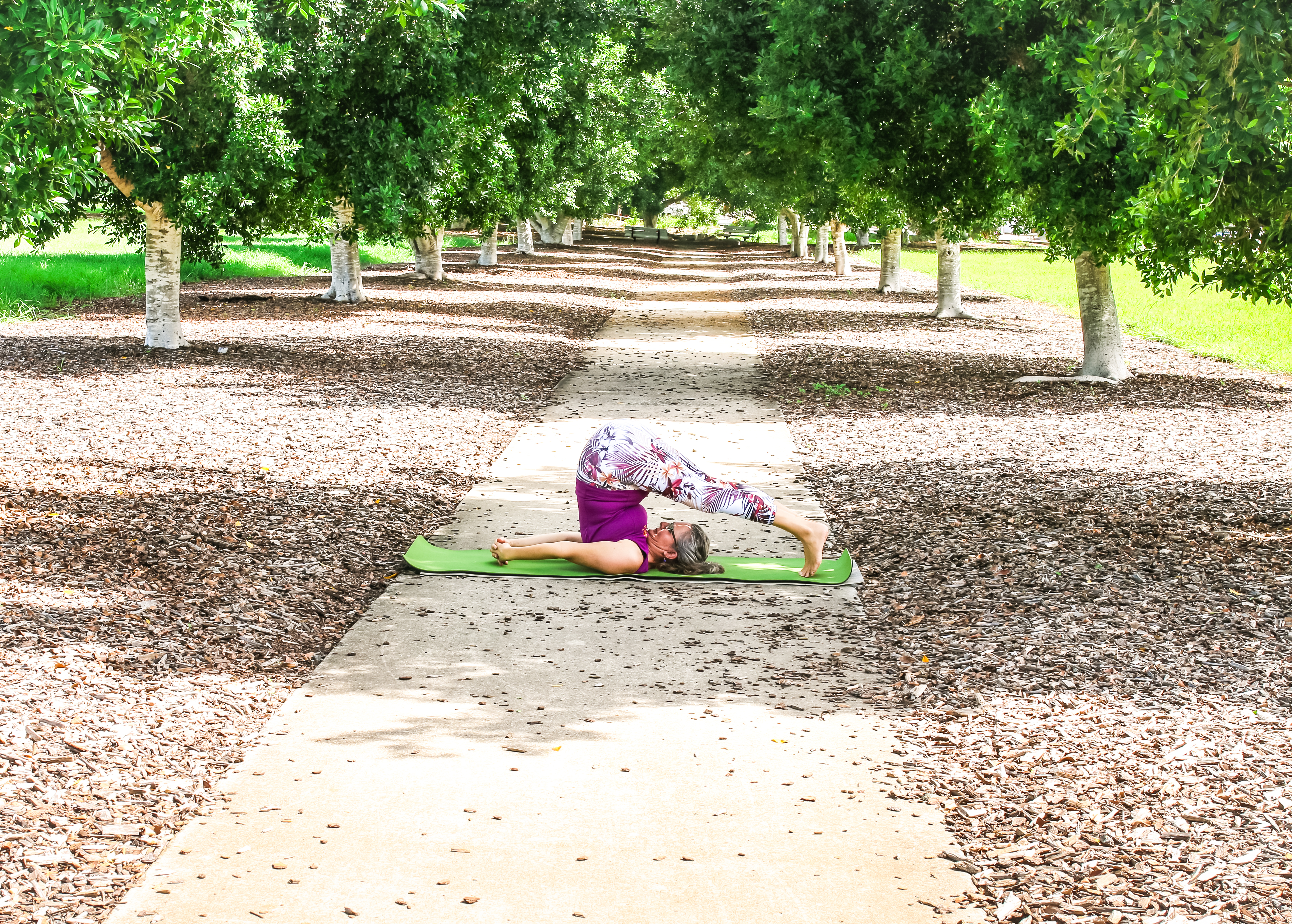
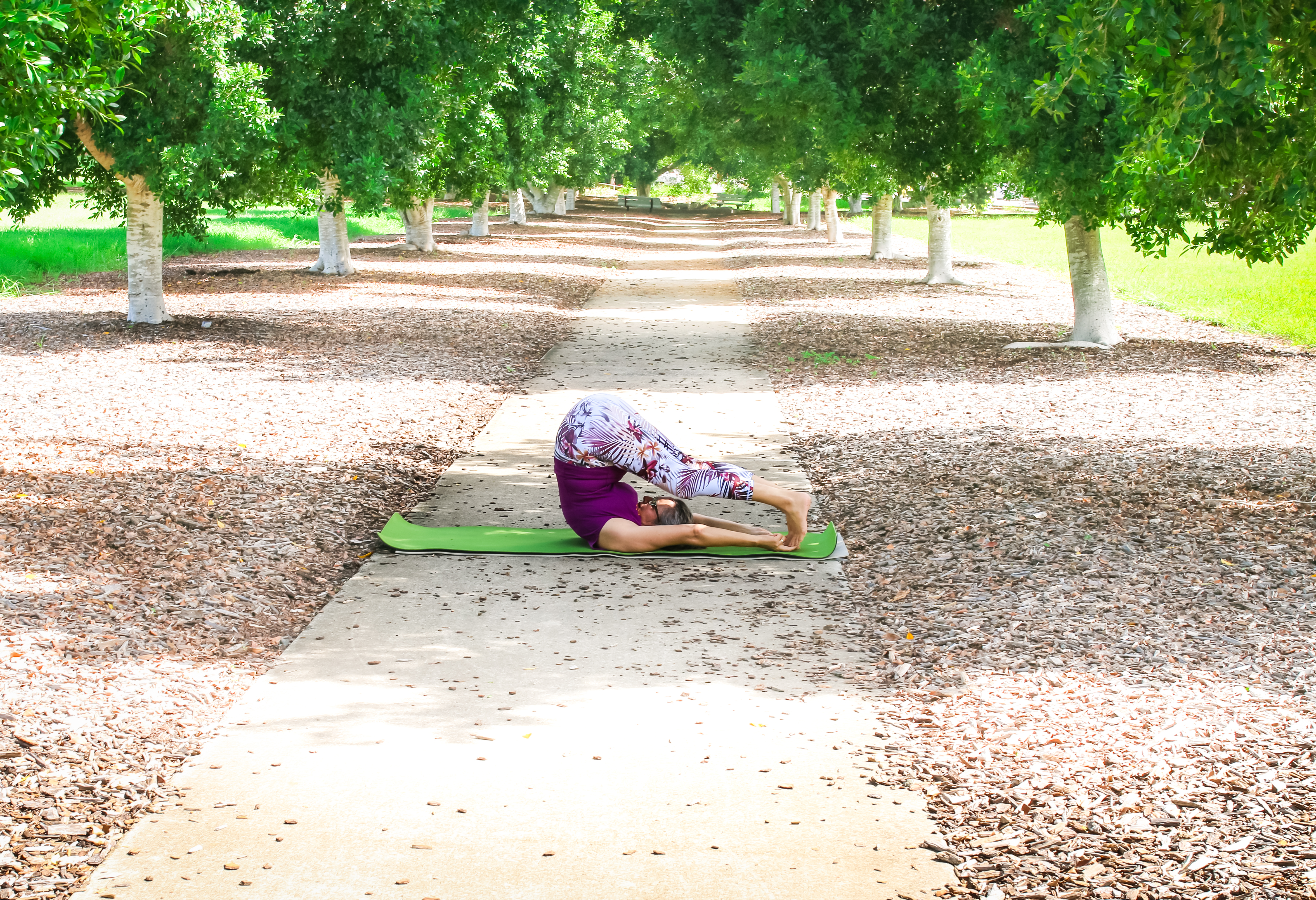
Halasana — the plough pose
Introduction
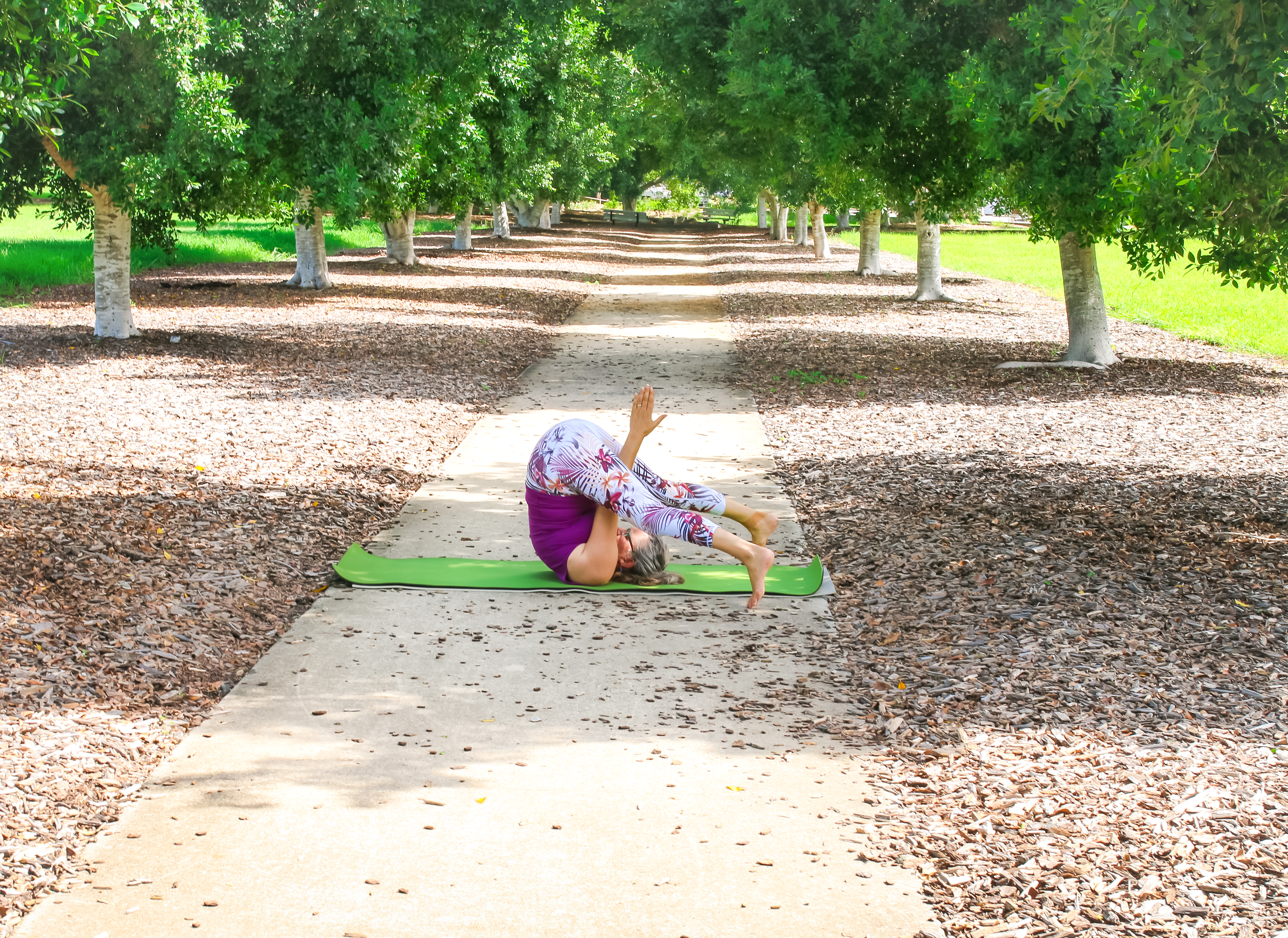
Halasana is very similar to the shoulderstand pose. In this Asana all muscles from the neck to the heels are stretched.
As you practice, please watch your neck and keep your body symmetrical.
Physical Benefits
- Brings fresh blood to the throat and thyroid gland.
- Locking of the chin massages the thyroid gland.
- Extends the cervical section of the spine giving it a powerful stretch. Same to the rest of the spine as well as hamstrings and calves.
- During the inhalation intense pressure is applied to the abdomen giving a good stimulation to the digestive system.
- Opens up the shoulder joints.
Energetic (Pranic) Benefits
- Stimulates the vishuddha chakra (throat psychic center).
- Stimulates the stomach, spleen, small intestin, heart, liver, gall bladder and kidney nadis (acupuncture meridiens).
Mental Benefits
- Reduces lethargy, mental sluggishness and laziness.
- Appeases insomnia and restless sleep.
Contra-indications
Do not practice halasana if you have any neck problems.
Do not stretch too far and do not hold the posture too long.



 Hatha Yoga Ipswich