this class is suitable for everyone who likes or needs an easier and shorter yoga class, this class is one hour. For the breathing and other exercises we sit on the chair, instead of floor. We do standing up exercises and on the yogmat or continue on the chair. In general we do not practice the Sun Salutation in this class.
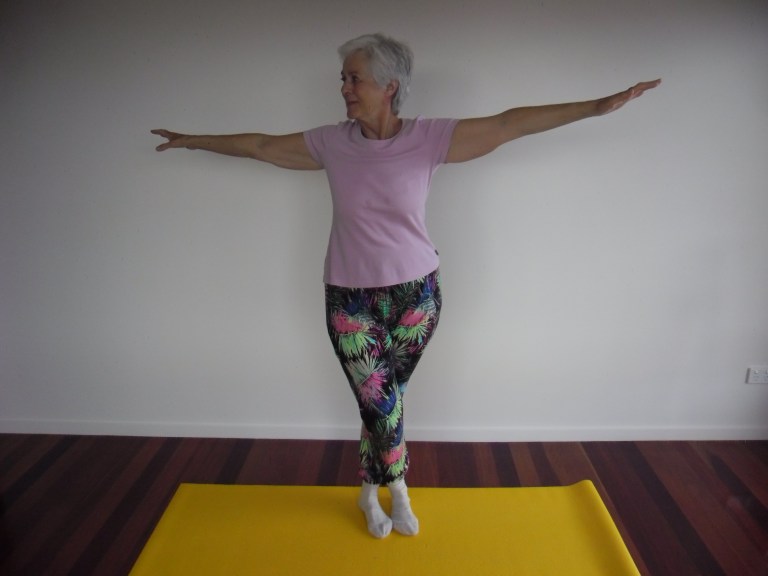
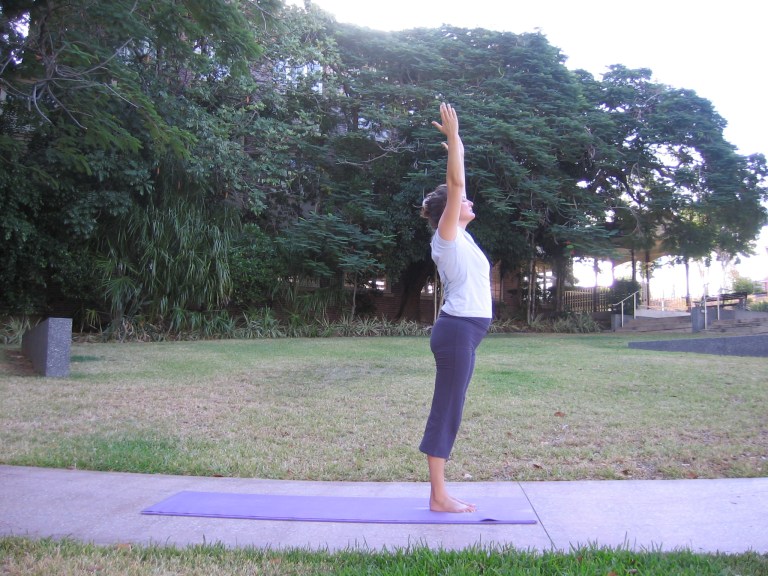
Standing spinal twist, my mother Pia Steiner, November 2015.
6:30pm – 8pm Hatha Yoga Class (new time), cost $15.- or yoga class pass
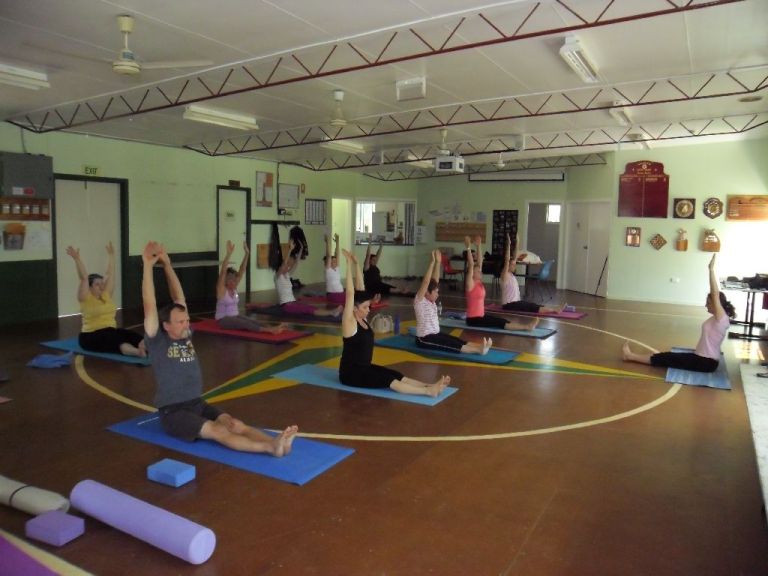
our usual 90 minutes hatha yoga class, breathing exercises (pranayama), sun salutation, 12 basic postures, final relaxation.
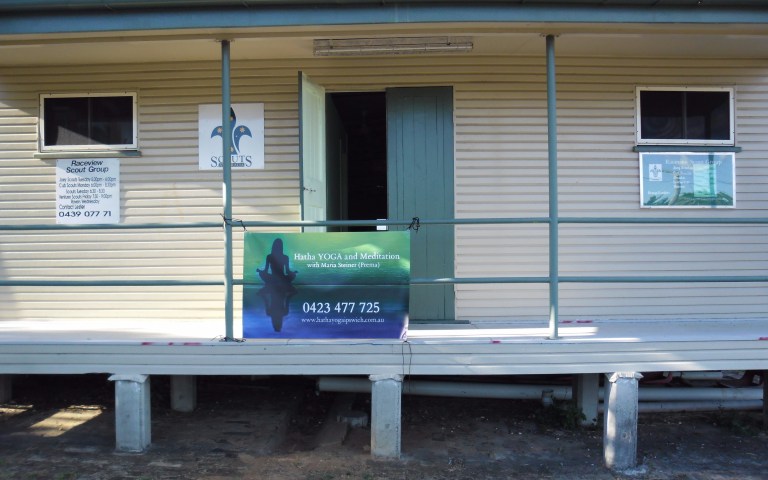
Hatha Yoga class with Maria Steiner at Raceview Scout Hall, Eastern Heights, Ipswich, QLD.
A few weeks ago, in one of the yoga classes, I talked about daily healthy habits. We narrowed it down to three. Here a short summary for everyone:
I start my day with lemon or lime water. Presently I have fresh limes from my garden.
Drink plenty of water 2 – 3 litres per day.
Stretch and move daily. This can be yoga, walking, swimming, running, cycling, fitness class, dancing, a few rounds of Sun Salutations. etc. Any kind of movement and stretching you like and you will do. It does not have to be long, 15 minutes daily is good.
Breathing exercises. Focusing on deep abdominal breathing, taking time out throughout the day to make time for some conscious breathing. This can even lead to a short meditation.
At the beginning of October this year, a journalist from SBS Radio in Melbourne contacted me for an interview over the phone about Yoga.
It’s for SBS Radio the German speaking program. The segment within the German program is in Swiss – German (my first language), the weekly program on a Sunday night is called Echo Helvetia: interviews, portraits, stories, etc. about Swiss immigrants in Australia.
Yoga teaches us how to use the lungs to their maximum capacity and how to control the breath. Proper breathing should be deep, slow and rhythmical. This increases vitality and mental clarity.
Breath is life. We can live for days without food or water, but deprive us of breath and we die in minutes. In view of this, it is astonishing how little attention we pay in normal life to the importance of breathing correctly. To a Yogi there are two main functions of proper breathing: to bring more oxygen to the blood and brain: and to control prana or vital energy, leading to control of the mind.
What is proper breathing?
Breathing correctly means breathing through the nose, keeping the mouth closed, and involves a full inhalation and exhalation which bring the whole of our lungs into play. There are three basic types of breathing: clavicular (shallow), intercostal (middle) and abdominal breathing (deep). A full yogic breath combines all three, beginning with a deep breath into the abdomen and continuing the inhalation through the intercostal and clavicular area. Without lifting the shoulders. The abdomen fills, the chest rises. When we inhale, the abdomen expands and the diaphragm moves down, massaging the abdominal organs. When we exhale, the abdomen contracts and the diaphragm moves up, massaging the heart. In the beginning it is very helpful to place one hand on the abdomen, and the other one on the chest.
Pranayama literally means control of life force or vital energy. Prana=vital energy, yama=control.
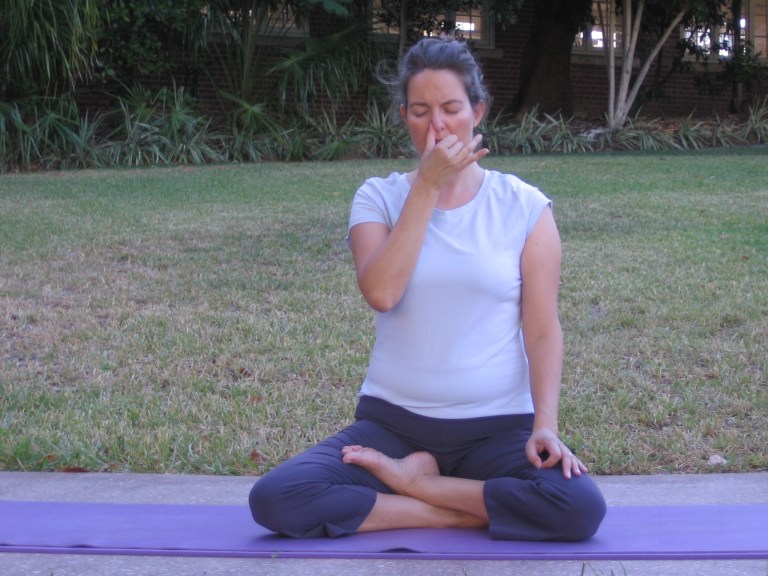
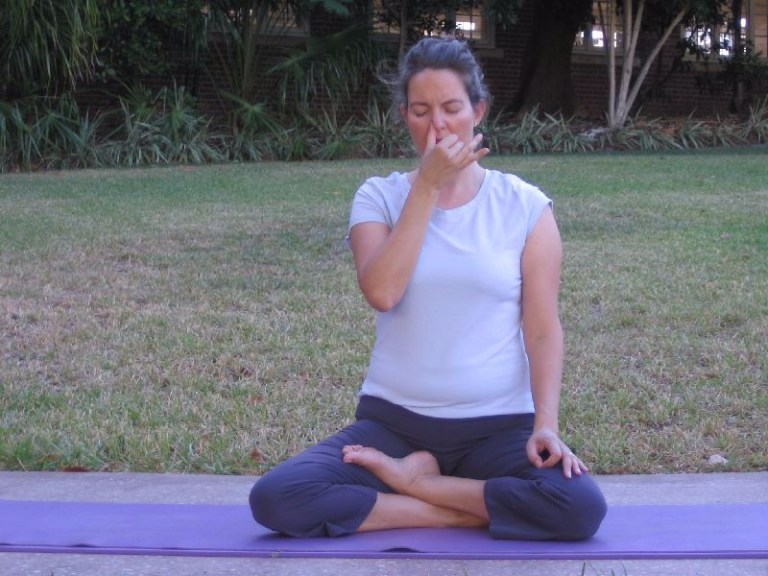
Anuloma Viloma – the alternate nostril breathing is one of many yogic breathing techniques or exercises.





 Hatha Yoga Ipswich