A few weeks ago, in one of the yoga classes, I talked about daily healthy habits. We narrowed it down to three. Here a short summary for everyone:
I start my day with lemon or lime water. Presently I have fresh limes from my garden.
Drink plenty of water 2 – 3 litres per day.
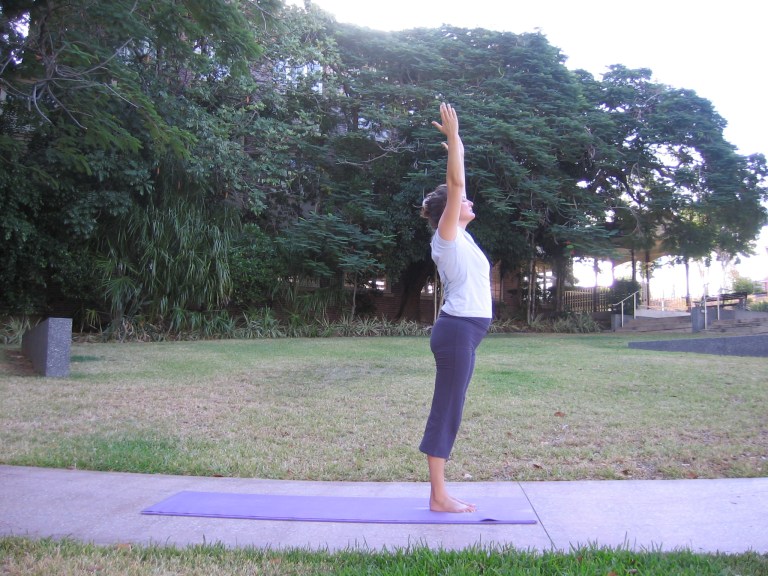
Stretch and move daily. This can be yoga, walking, swimming, running, cycling, fitness class, dancing, a few rounds of Sun Salutations. etc. Any kind of movement and stretching you like and you will do. It does not have to be long, 15 minutes daily is good.
Breathing exercises. Focusing on deep abdominal breathing, taking time out throughout the day to make time for some conscious breathing. This can even lead to a short meditation.
Long before the invention of cars, planes, telephones, computers, social media, freeways and other modern triggers of stress, the Rishis (sages or seers) and Yogis of yore devised very powerful techniques of deep relaxation. As a matter of fact, many modern stress-management and relaxation methods borrow heavily from this tradition. By relaxing deeply all the muscles the Yogi can thoroughly rejuvenate his/her nervous system and attain a deep sense of inner peace.
When the body and the mind are constantly overworked, their natural efficiency to perform work diminishes. Modern social life, food, work and even the so-called entertainment, make it difficult for modern people to relax. Many have even forgotten that rest and relaxation are nature’s way of recharging. Even while trying to rest, the average person expends a lot of physical and mental energy through tension. Much of the body’s energy is wasted uselessly.
More of our energy is spent in keeping the muscles in continual readiness for work than in the actual useful work done. In order to regulate and balance the work of the body and mind, it is best to learn to economize the energy produced by our body. This may be done by learning to relax.
It may be remembered that in the course of one day, our body usually produce all the substances and energy necessary for the next day. But it often happens that all these substances and energy may be consumed within a few minutes by bad moods, anger, injury or intense irritation. The process of eruption and repression of violent emotions often grows into a regular habit. The result is disastrous, not only for the body, but also for the mind.
During complete relaxation, there is practically no energy or “Prana” being consumed, although a little is keeping the body in normal condition while the remaining portion is being stored and conserved.
In order to achieve perfect relaxation, three methods are used by yogis: “Physical”, “Mental”, and “Spiritual” relaxation. Relaxation is not complete until the person reaches that stage of spiritual relaxation.
1 – PHYSICAL RELAXATION
We know that every action is the result of thought. Thoughts take form in action, the body reaching to the thought. Just as the mind may send a message to the muscles ordering them to contract, the mind may also send another message to bring the relaxation to the tired muscles.
Physical relaxation first begins with the toes and then moves upward. The autosuggestion passes through the muscles and reaches the eyes and ears at the top. Then, slowly, messages are sent to the kidneys, liver and the other internal organs. This relaxation position is known as Savasana, or the Corpse Pose.
2 – MENTAL RELAXATION
When experiencing mental tension, it is advisable to breathe slowly and rhythmically for a few minutes. Soon the mind will become calm. You may experience a kind of floating sensation.
3 – SPIRITUAL RELAXATION
However one may try to relax the mind, all tensions and worries cannot be completely removed until one reaches spiritual relaxation.
As long as a person identifies with the body and the mind, there will be worries, sorrows, anxieties, fear and anger. These emotions, in turn bring tension. Yogis know that unless a person can withdraw from the body/mind idea and separate himself from the ego-consciousness, there is no way of obtaining complete relaxation.
The yogi identifies himself with the all pervading, all-powerful, all-peaceful and joyful self, or pure consciousness within. He knows that the source of all power, knowledge, peace and strength is in the self, not in the body. We tune to this by asserting the real nature, that is “I am that pure consciousness or self”. This identification with the self completes the process of relaxation.
Savasana – corpse pose – classic yoga relaxation posture.
Relaxation lying on the abdomen.
“The practice of relaxing the muscles of the body will bring rest to the body and to the mind also. The tension of the muscles will be relieved. People who know the science of relaxation do not waste any energy. They can meditate well. Take a few deep breaths and then lie down flat on your back as in Savasana. Roll on to one side and then relax as thoroughly as you can do. Do not strain the muscles. Roll on the other side and relax. This is naturally done by all during sleep. There are various exercises in relaxation, for the particular muscles of a particular part of the body. You can relax the head, the shoulders, the arms, forearms, wrist, etc. Yogins know the science of relaxation thoroughly. When you practise these various relaxation exercises, you must have the mental picture of calmness and strength.”
At the beginning of October this year, a journalist from SBS Radio in Melbourne contacted me for an interview over the phone about Yoga.
It’s for SBS Radio the German speaking program. The segment within the German program is in Swiss – German (my first language), the weekly program on a Sunday night is called Echo Helvetia: interviews, portraits, stories, etc. about Swiss immigrants in Australia.
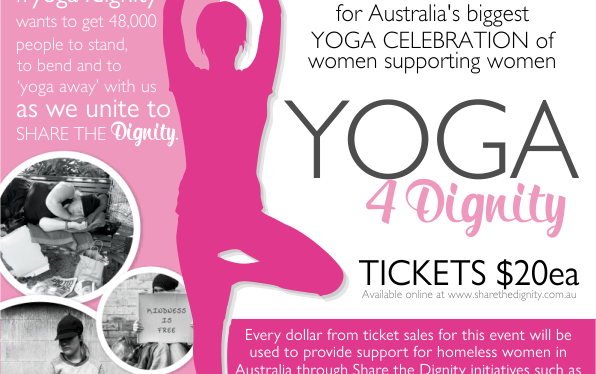
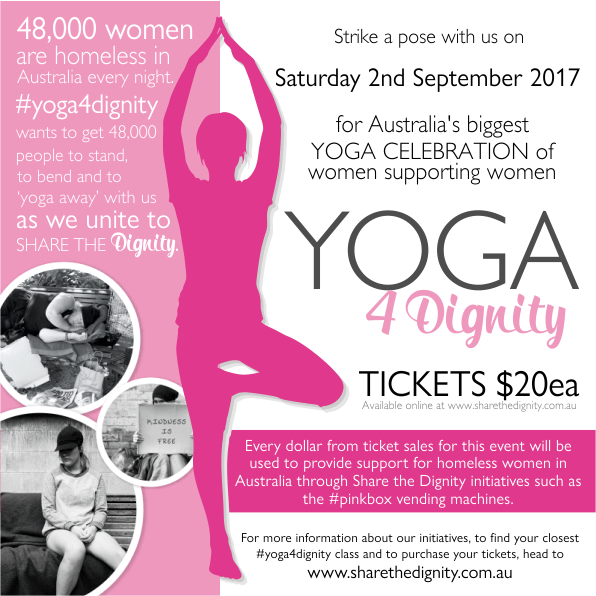
Australia wide Event on Saturday morning 2nd September 2017, starting at 8am.
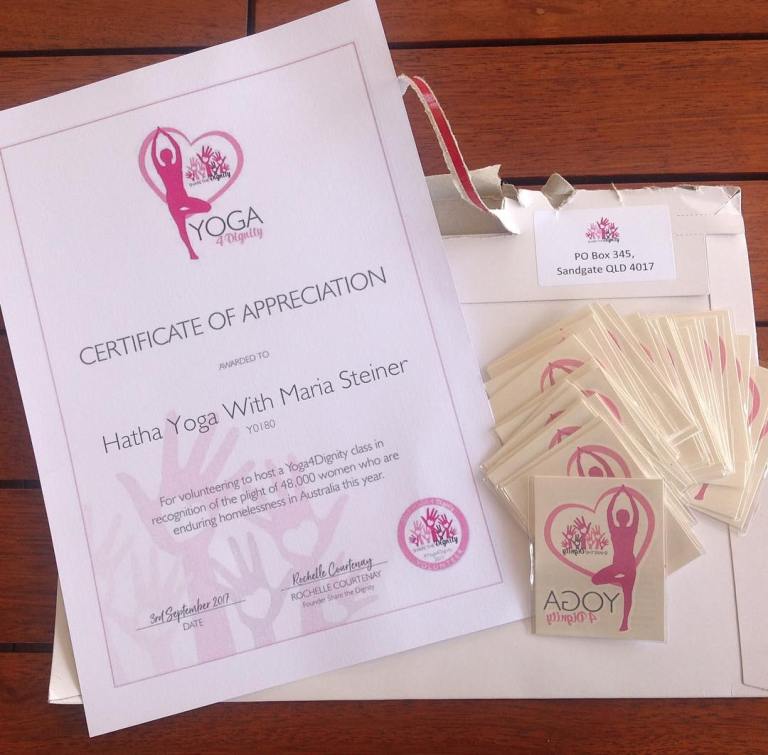
#Yoga4Dinigty will bring thousands of women & men from Australia together to Share the Dignity whilst at the same time opening our hearts and touching our toes. In Australia we have 48,000 homeless women and it is our GOAL this year to have the same number practising YOGA in your hometown as we share #Yoga4Dignity. The cost is $20 and you donate directly tohttps://www.sharethedignity.com.au/
I donate my time to teach this class, and the Scouts are donating the use of the Hall on this Saturday, I don’t have to pay any hall hire cost.
The class I’m teaching will be at the
SCOUT HALL in Cameron Park, Easton Street, Booval 4304
As this is an Australia wide event, you find many other classes Interstate, in Queensland and others in Ipswich / Flinders View / Springfield. Please check the full listing and find the nearest yoga class for you, your friends and family:
I’m back in Ipswich from another beautiful trip to my home country.
All classes during autumn / winter / early Spring as per our well-known weekly yoga class schedule:
Cameron Park, Scout Hall, Easton Street, Booval
(this hall has a heather, no excuse to miss class)
Tuesdays, 6:00pm–7:30pm
Raceview Scout Hall, 32 Taylor Street, Eastern Heights
Tuesdays, 9:00am – 10:30am *) followed by meditation 10:30am-11am, if you wish to stay.
Wednesdays 9:00am – 10:00am Seniors Yoga class *) followed by meditation 10am – 10:30am, if you wish to stay.
Thursdays, 5:00pm – 6:30pm
Thursdays, 7:00pm – 8:30pm
Cost
first trial class: free
drop-in class $15.00
5-class pass (valid for 2 months) $70.00
10-class pass (valid for 4 months) $120.00
Cost for Senior Class (Wednesday 9am – 10am)
first class: free
single class $10.00
10-class-pass $80.00
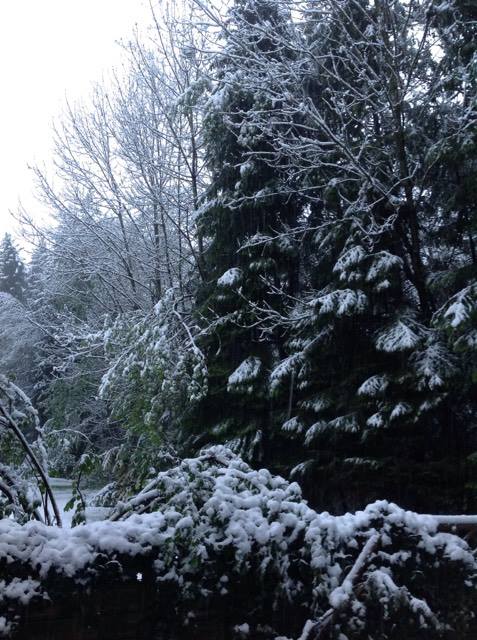
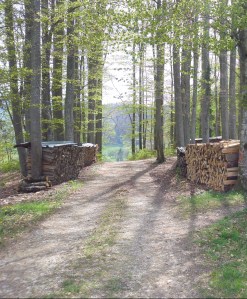
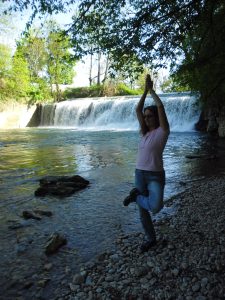
Snow in Spring near Lucerne, Switzerland, April 2017.Spring in Switzerland, country side of Basel, April 2017. This should be enough firewood for our Queensland Winter.Spring in Switzerland, May 2017.
Yoga teaches us how to use the lungs to their maximum capacity and how to control the breath. Proper breathing should be deep, slow and rhythmical. This increases vitality and mental clarity.
Breath is life. We can live for days without food or water, but deprive us of breath and we die in minutes. In view of this, it is astonishing how little attention we pay in normal life to the importance of breathing correctly. To a Yogi there are two main functions of proper breathing: to bring more oxygen to the blood and brain: and to control prana or vital energy, leading to control of the mind.
What is proper breathing?
Breathing correctly means breathing through the nose, keeping the mouth closed, and involves a full inhalation and exhalation which bring the whole of our lungs into play. There are three basic types of breathing: clavicular (shallow), intercostal (middle) and abdominal breathing (deep). A full yogic breath combines all three, beginning with a deep breath into the abdomen and continuing the inhalation through the intercostal and clavicular area. Without lifting the shoulders. The abdomen fills, the chest rises. When we inhale, the abdomen expands and the diaphragm moves down, massaging the abdominal organs. When we exhale, the abdomen contracts and the diaphragm moves up, massaging the heart. In the beginning it is very helpful to place one hand on the abdomen, and the other one on the chest.
Pranayama literally means control of life force or vital energy. Prana=vital energy, yama=control.
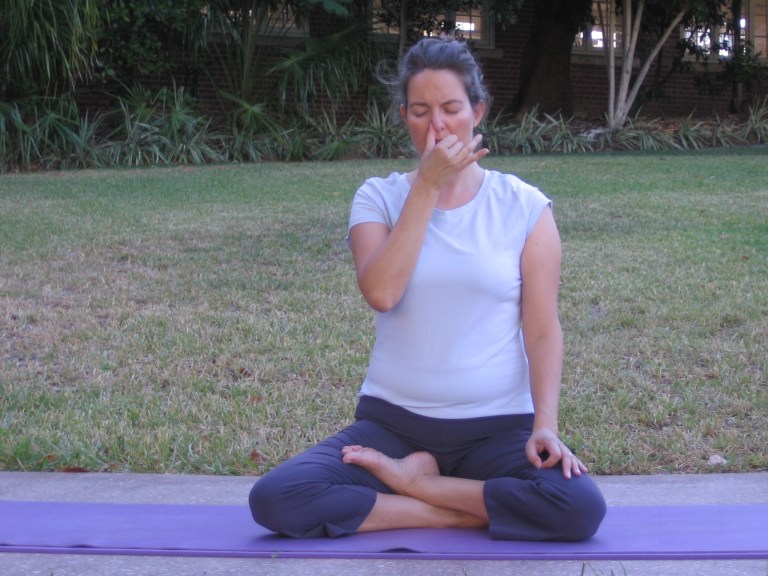
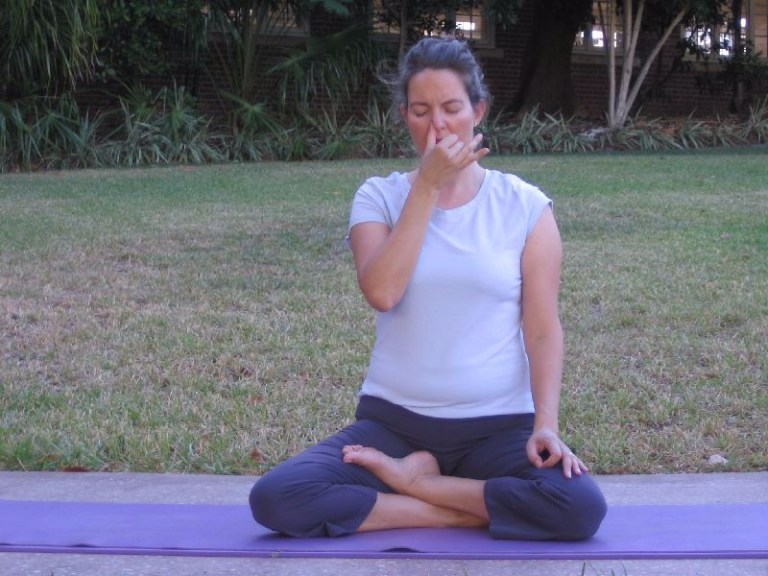
Anuloma Viloma – the alternate nostril breathing is one of many yogic breathing techniques or exercises.
Our physical body is meant to move and exercise. If our lifestyle does not provide natural motion of muscles and joints, then disease and great discomfort will ensue with time. Proper exercise should be pleasant to the practitioner while beneficial to the body, mind and spiritual life.
Asanas or yoga postures/exercises focus on increasing and maintaining flexibility of the spine, toning and rejuvenating the nervous system. The gentle stretching, twisting and bending movements bring flexibility to the joints and muscles of the body, as well as massaging the glands and organs. Circulation is also improved, ensuring oxygen to all the cells of the body. The different poses put pressure on various points, which help to relax the nervous system and therefore also helps to release stress.
The Sanskrit word Asana means steady pose, therefore holding the yoga postures is beneficial. Taking a few deep breaths in every pose, slowing down.
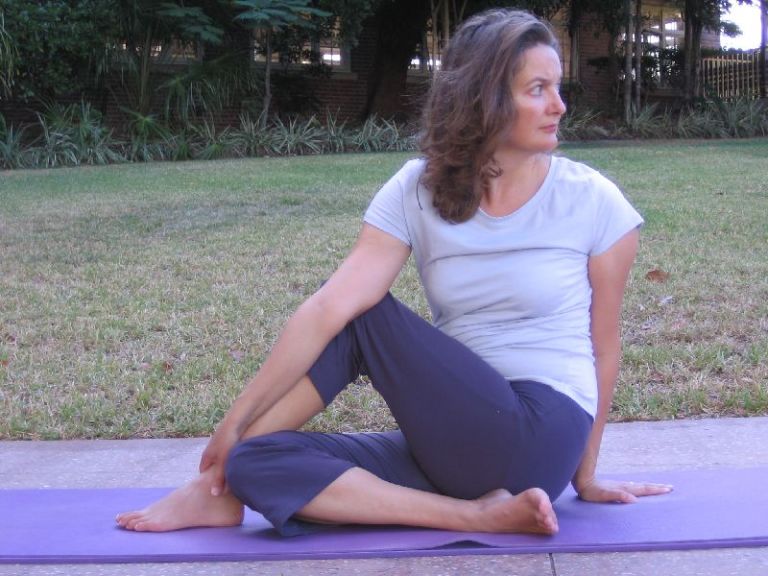
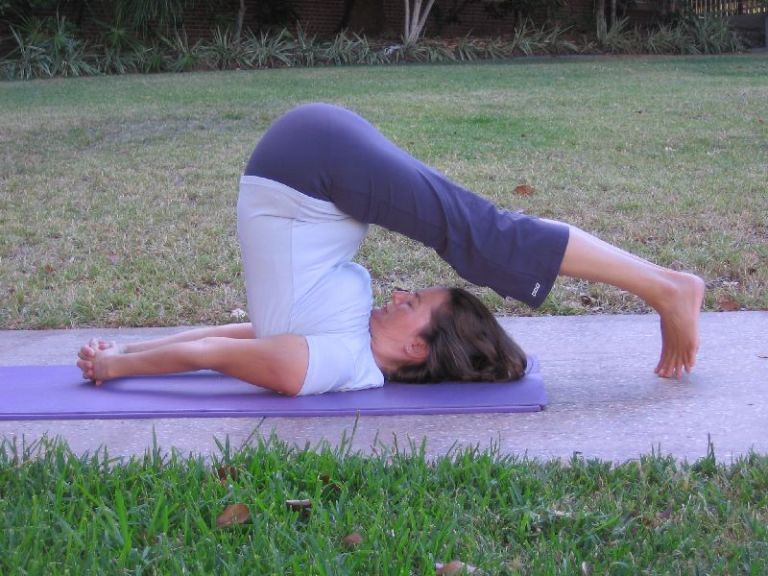
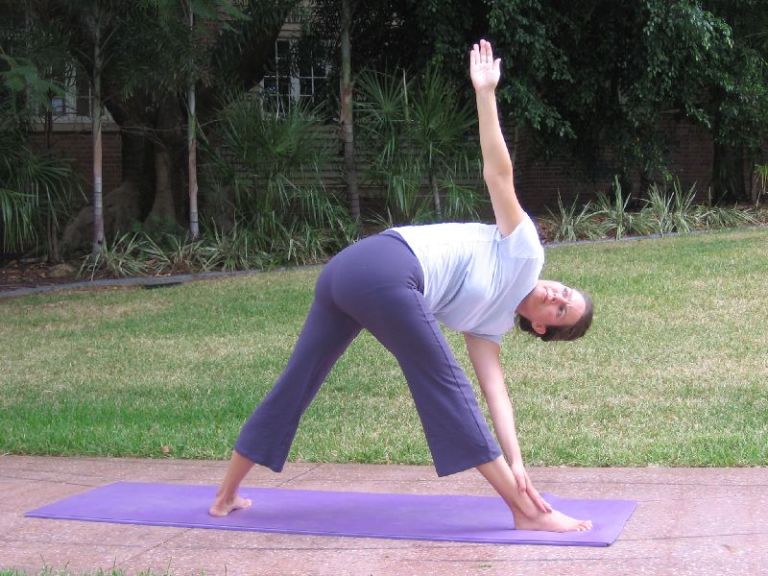
Ardha Matseyndrasana – half spinal twist.Halasana – the plough.Standing spinal twist in triangle – Parivritta Trikonasana.
You can join for both sessions to get most benefits, a good way to end the working week. Or if this is not possible for you, just attend the Hatha Yoga class or the Satsang/Kirtan class.
In between the two sessions we have a cup of tea and something sweet.
If you know you will be coming for sure, please let me know (message, email or in class). Otherwise it is perfectly fine to just show up and bring your friends.
Looking forward to a yogic start into the weekend. OM OM OM










 Hatha Yoga Ipswich