While Im travelling I offer some Yoga classes online on Zoom.
I have the dates marked in my calendar, but will always confirm again.
The times are Ipswich/Brisbane time.
If you have a yoga class pass, I will tick it off, once I’m back home in Ipswich, and we know the connection worked well. If you pay for the single, individual class, please pay after the class (not before), I want to be sure this works good for everyone.
Wednesday 18 June 5pm
Tuesday 24 June 6pm
Tuesday 1 July 6pm
Wednesday 9 July 5pm
If you would like to join one of the above online Hatha Yoga classes, please send me an email to hathayogaipswich@gmail.com to receive login details. Thank you !!
On Tuesday 22 July the Yoga classes resume as per our well known times and locations, at the Scout Halls and online Zoom.
Our first Meditation for the year is already coming up, on Friday 17th January 2025 at 5pm – 6:30pm. You need to book for this session. Thank you, call or text Maria on 0423 477 725.
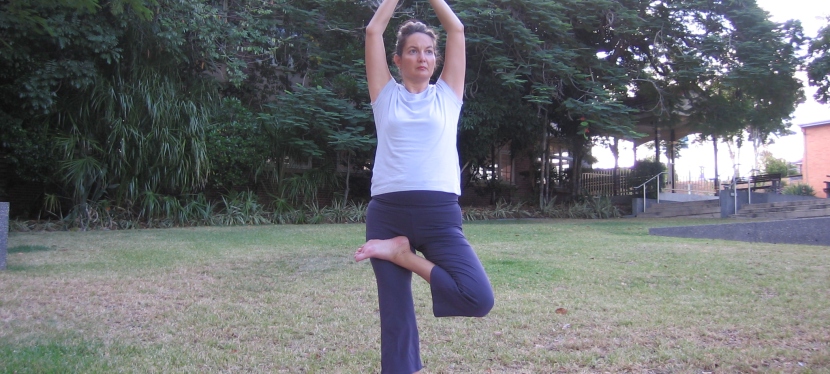
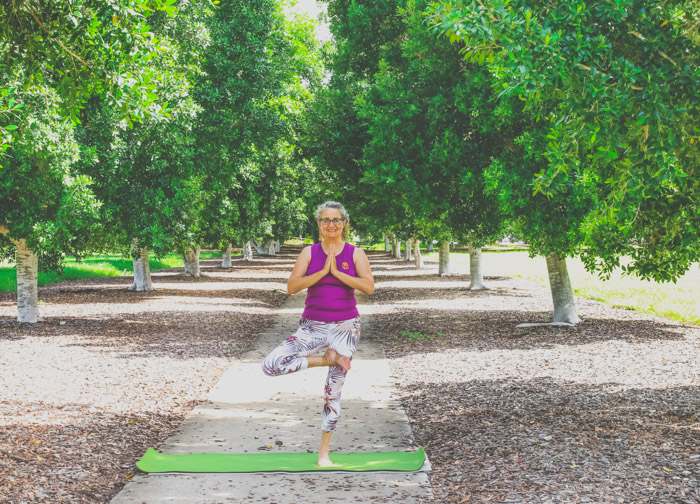
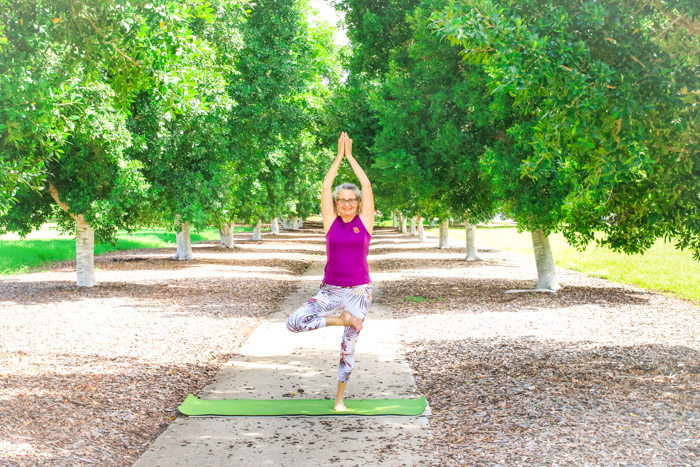
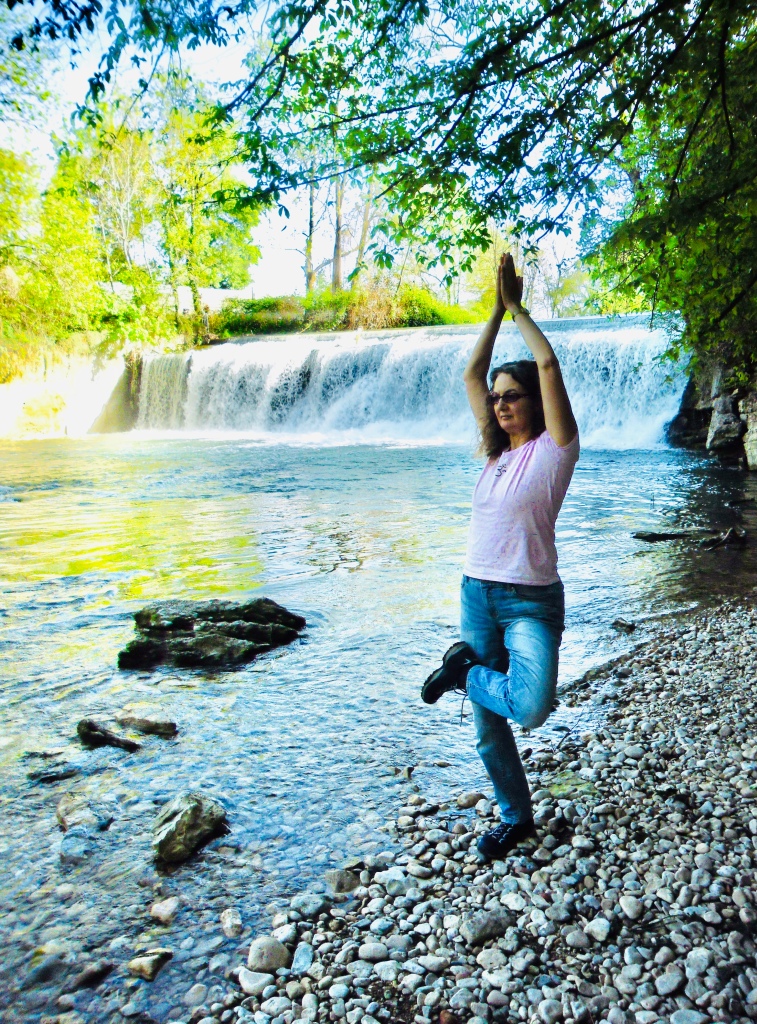
The balancing postures on one leg are mentally highly demanding. These postures develop, to the highest degree, the powers of mental concentration and single-mindedness of thought, as well as physical balance.
Practising this asana brings a wonderful feeling of inner peace and concentration. Poised on one leg with the other foot as high up as half lotus, or at ankle or knee height. The hands pressed together in prayer position, in front of the chest or stretched up above the head. It also improves the muscle strength in the standing leg, keeping the back and spine straight. Therefore always practice on both sides, even though usually one side is easier than the other.
In the Yoga tradition, that I practice and teach, we chant/sing/recite many Sanskrit Mantras. These Mantras all have different meanings: Mantra for protection, Mantra for safe travelling, opening and closing Mantra for the Yoga class…..
Every Day of the week is dedicated to a different Deity. In my own practice I observe these days with specific Mantras for the Deity of the Day.
Friday is Devi day, honoring the Divine Mother.
Please click on the link below to listen to a short recording, I’ve done this morning. This sound file is unedited….. I simply recorded myself as I play the harmonium and chant the Mantra.
Here is the most important point of all, we become what we think. Thus we should exert to entertain positive and creative thoughts as these will contribute to vibrant health and a peaceful, joyful mind. A positive outlook on life can be developed by learning and practising the teachings of the philosophy of Vedanta. The mind will be brought under perfect control by regular practice of meditation.
Meditation is a natural state of consciousness that isn’t learned, any more that you learn to sleep. It just happens. When the mind becomes one-pointed and steady, it will naturally go beyond the normal mundane awareness into the state referred to as meditation.
Before meditation, practice concentration, one – pointed thinking. Then this practice will lead to a meditative state of the mind. Train the mind in a variety of ways in concentration in the beginning. Sit in a quiet place, or in nature focus on your breath. Inhale – Exhale …… mentally repeating a Mantra “OM” or “Soham”. Concentrate on any concrete image: a flower, a candle, the blue sky. Concentrate within on one of the Chakras.
In meditation do not strain the eyes. Do not strain the brain. Do not struggle or wrestle with the mind. Relax. Observe the thoughts like a cloud passing by. Gently allow the divine thoughts flow.
Meditation practice – Concentration on a flower.
Through regular meditation, the mind becomes clear and the motives pure. The subconscious mind release hidden knowledge that allows a better understanding of oneself and our relationship to the world. the limited personality slowly dissolves into an expanded consciousness. Ultimately, the super-conscious or intuitive forces are released, leading to a life of wisdom and peace.
Swami Vishnu-Devananda
Sunrise Meditation in nature – yoga weekend retreat September 2018.
Besides being responsible for building our physical body, the foods we eat profoundly affect our mind. For maximum body-mind efficiency and complete spiritual awareness, Yoga advocates a lacto-vegetarian diet. This is an integral part of the Yogic lifestyle.
The yogic diet is a vegetarian one, consisting of pure, simple, natural foods which are easily digested and promote health. Simple meals aid the digestion and assimilation of foods. Nutritional requirements fall under five categories: protein, carbohydrates, minerals, fats and vitamins. One should have a certain knowledge of dietetics in order to balance the diet. Eating foods first-hand from nature, grown in fertile soil (preferably organic, free from chemicals and pesticides) will help ensure a better supply of these nutritional needs. Processing, refining and overcooking destroy much food value.
There is a cycle in nature known as the “food cycle” or “food chain”. The Sun is the source of energy for all life on our planet; it nourishes the plants (the top of the food chain) which are then eaten by animals (vegetarian), which are then eaten by other animals (carnivores). The food at the top of the food chain, being directly nourished by the Sun, has the greatest life promoting properties. The food value of animal flesh is termed as “second-hand” source of nutrition, and is inferior in nature. All natural foods (fruits, vegetables, seeds, nuts and grains) have, in varying quantities, different proportions of these essential nutrients. As source of protein, these are easily assimilated by the body. However, second-hand sources are often more difficult to digest and are of less value to the body’s metabolism.
Many people worry about whether they are getting enough protein, but neglect other factors. The quality of the protein is more important than the quantity alone. Dairy products, legumes, nuts and seeds provide the vegetarian with an adequate supply of protein.
A healthy motto is: “Eat to live, not live to eat”. It is best if we understand that the purpose of eating is to supply our being with the lifeforce,or Prana, the vital life energy. So the greatest nutritional plan for the Yoga student is the simple diet of natural fresh foods.
However, the true Yogic diet is actually even more selective than this. The Yogi is concerned with the subtle effect that food has on his mind and astral body. He therefore avoids foods which are overly stimulating, preferring those which render the mind calm and the intellect sharp. One who seriously takes to the path of Yoga would avoid ingesting meats, fish, eggs, onions, garlic, coffee, tea (except herbal), alcohol and drugs.
Any change in diet should be made gradually. Start by substituting larger portions of vegetables, grains, seeds and nuts until finally all flesh products have been completely eliminated from the diet.
The Yogic diet will help you attain a high standard of health, keen intellect and serenity of mind. To really understand the Yogic approach to diet one has to get familiar with the concept of the 3 Gunas * or qualities of nature.
*(I’ll explain the 3 Gunas in a future post)
I eat and thrive on a vegetarian diet since many years, including raw vegan.
Quinoa salad, zucchini fritters, roasted vegetables with yogurt dressing + and raw vegetables / mixed salad with avocado dressing.
Vegetables from my garden: sauteed greens (silverbeet+spinach), rocket or rucola, cherry tomatoes and homemade sauerkraut.
Raw Vegetable plate at my sister’s place in Switzerland, made with organic vegetables fresh from the farmers market.
Long before the invention of cars, planes, telephones, computers, social media, freeways and other modern triggers of stress, the Rishis (sages or seers) and Yogis of yore devised very powerful techniques of deep relaxation. As a matter of fact, many modern stress-management and relaxation methods borrow heavily from this tradition. By relaxing deeply all the muscles the Yogi can thoroughly rejuvenate his/her nervous system and attain a deep sense of inner peace.
When the body and the mind are constantly overworked, their natural efficiency to perform work diminishes. Modern social life, food, work and even the so-called entertainment, make it difficult for modern people to relax. Many have even forgotten that rest and relaxation are nature’s way of recharging. Even while trying to rest, the average person expends a lot of physical and mental energy through tension. Much of the body’s energy is wasted uselessly.
More of our energy is spent in keeping the muscles in continual readiness for work than in the actual useful work done. In order to regulate and balance the work of the body and mind, it is best to learn to economize the energy produced by our body. This may be done by learning to relax.
It may be remembered that in the course of one day, our body usually produce all the substances and energy necessary for the next day. But it often happens that all these substances and energy may be consumed within a few minutes by bad moods, anger, injury or intense irritation. The process of eruption and repression of violent emotions often grows into a regular habit. The result is disastrous, not only for the body, but also for the mind.
During complete relaxation, there is practically no energy or “Prana” being consumed, although a little is keeping the body in normal condition while the remaining portion is being stored and conserved.
In order to achieve perfect relaxation, three methods are used by yogis: “Physical”, “Mental”, and “Spiritual” relaxation. Relaxation is not complete until the person reaches that stage of spiritual relaxation.
1 – PHYSICAL RELAXATION
We know that every action is the result of thought. Thoughts take form in action, the body reaching to the thought. Just as the mind may send a message to the muscles ordering them to contract, the mind may also send another message to bring the relaxation to the tired muscles.
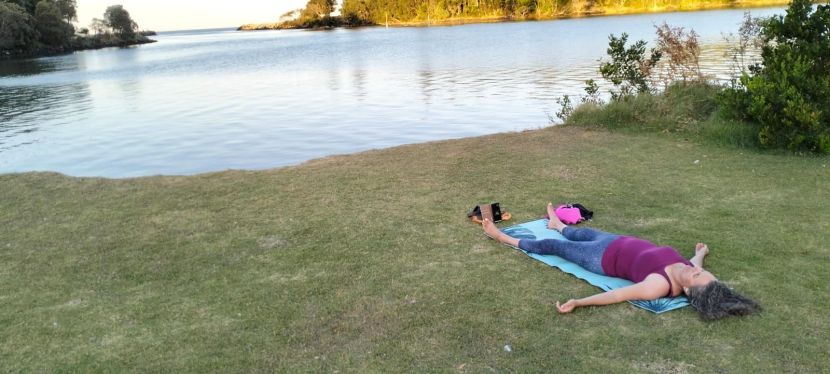
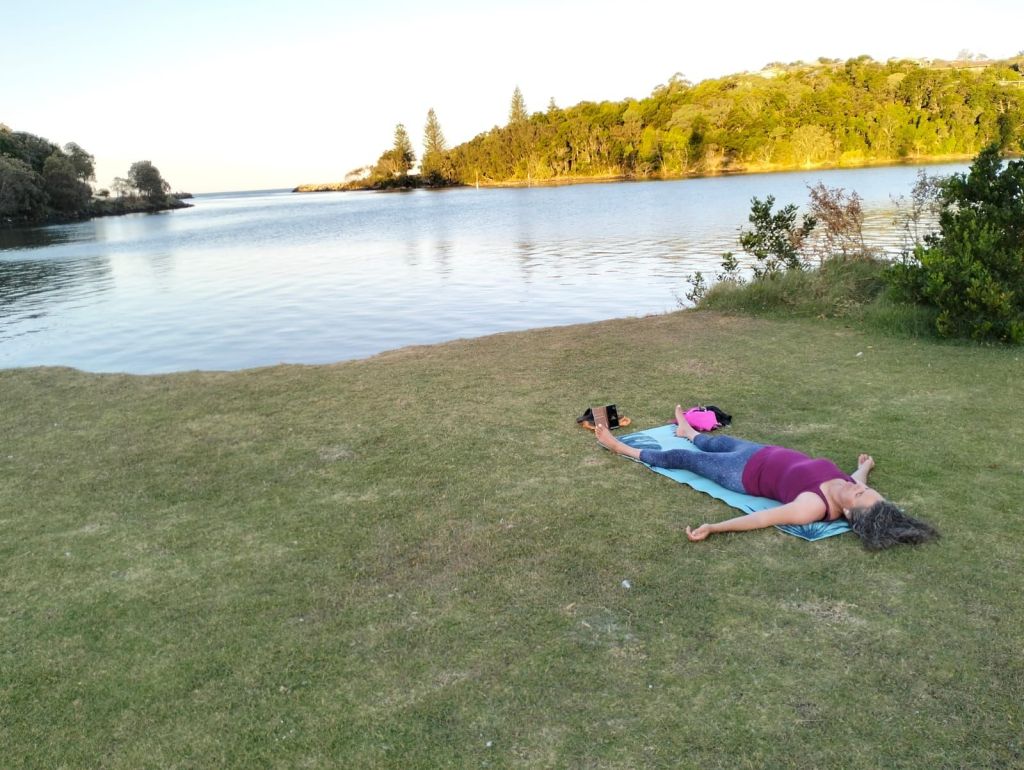
Physical relaxation first begins with the toes and then moves upward. The autosuggestion passes through the muscles and reaches the eyes and ears at the top. Then, slowly, messages are sent to the kidneys, liver and the other internal organs. This relaxation position is known as Savasana, or the Corpse Pose.
2 – MENTAL RELAXATION
When experiencing mental tension, it is advisable to breathe slowly and rhythmically for a few minutes. Soon the mind will become calm. You may experience a kind of floating sensation.
3 – SPIRITUAL RELAXATION
However one may try to relax the mind, all tensions and worries cannot be completely removed until one reaches spiritual relaxation.
As long as a person identifies with the body and the mind, there will be worries, sorrows, anxieties, fear and anger. These emotions, in turn bring tension. Yogis know that unless a person can withdraw from the body/mind idea and separate himself from the ego-consciousness, there is no way of obtaining complete relaxation.
The yogi identifies himself with the all pervading, all-powerful, all-peaceful and joyful self, or pure consciousness within. He knows that the source of all power, knowledge, peace and strength is in the self, not in the body. We tune to this by asserting the real nature, that is “I am that pure consciousness or self”. This identification with the self completes the process of relaxation.
Savasana – corpse pose – classic yoga relaxation posture.
Relaxation lying on the abdomen.
“The practice of relaxing the muscles of the body will bring rest to the body and to the mind also. The tension of the muscles will be relieved. People who know the science of relaxation do not waste any energy. They can meditate well. Take a few deep breaths and then lie down flat on your back as in Savasana. Roll on to one side and then relax as thoroughly as you can do. Do not strain the muscles. Roll on the other side and relax. This is naturally done by all during sleep. There are various exercises in relaxation, for the particular muscles of a particular part of the body. You can relax the head, the shoulders, the arms, forearms, wrist, etc. Yogins know the science of relaxation thoroughly. When you practise these various relaxation exercises, you must have the mental picture of calmness and strength.”
At the beginning of October this year, a journalist from SBS Radio in Melbourne contacted me for an interview over the phone about Yoga.
It’s for SBS Radio the German speaking program. The segment within the German program is in Swiss – German (my first language), the weekly program on a Sunday night is called Echo Helvetia: interviews, portraits, stories, etc. about Swiss immigrants in Australia.
Yoga teaches us how to use the lungs to their maximum capacity and how to control the breath. Proper breathing should be deep, slow and rhythmical. This increases vitality and mental clarity.
Breath is life. We can live for days without food or water, but deprive us of breath and we die in minutes. In view of this, it is astonishing how little attention we pay in normal life to the importance of breathing correctly. To a Yogi there are two main functions of proper breathing: to bring more oxygen to the blood and brain: and to control prana or vital energy, leading to control of the mind.
What is proper breathing?
Breathing correctly means breathing through the nose, keeping the mouth closed, and involves a full inhalation and exhalation which bring the whole of our lungs into play. There are three basic types of breathing: clavicular (shallow), intercostal (middle) and abdominal breathing (deep). A full yogic breath combines all three, beginning with a deep breath into the abdomen and continuing the inhalation through the intercostal and clavicular area. Without lifting the shoulders. The abdomen fills, the chest rises. When we inhale, the abdomen expands and the diaphragm moves down, massaging the abdominal organs. When we exhale, the abdomen contracts and the diaphragm moves up, massaging the heart. In the beginning it is very helpful to place one hand on the abdomen, and the other one on the chest.
Pranayama literally means control of life force or vital energy. Prana=vital energy, yama=control.
Anuloma Viloma – the alternate nostril breathing is one of many yogic breathing techniques or exercises.




 Hatha Yoga Ipswich